In statistics, the generalized Marcum Q-function of order is defined as
where and and is the modified Bessel function of first kind of order . If , the integral converges for any . The Marcum Q-function occurs as a complementary cumulative distribution function for noncentral chi, noncentral chi-squared, and Rice distributions. In engineering, this function appears in the study of radar systems, communication systems, queueing system, and signal processing. This function was first studied for by, and hence named after, Jess Marcum for pulsed radars.
Using the fact that , the generalized Marcum Q-function can alternatively be defined as a finite integral as
However, it is preferable to have an integral representation of the Marcum Q-function such that (i) the limits of the integral are independent of the arguments of the function, (ii) and that the limits are finite, (iii) and that the integrand is a Gaussian function of these arguments. For positive integer values of , such a representation is given by the trigonometric integral
where
and the ratio is a constant.
For any real , such finite trigonometric integral is given by
where is as defined before, , and the additional correction term is given by
For integer values of , the correction term tend to vanish.
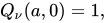
Some specific values of Marcum-Q function are
Various upper and lower bounds of generalized Marcum-Q function can be obtained using monotonicity and log-concavity of the function and the fact that we have closed form expression for when is half-integer valued.
Let and denote the pair of half-integer rounding operators that map a real to its nearest left and right half-odd integer, respectively, according to the relations
where and denote the integer floor and ceiling functions.
Using the trigonometric integral representation for integer valued , the following Cauchy-Schwarz bound can be obtained
where .
For analytical purpose, it is often useful to have bounds in simple exponential form, even though they may not be the tightest bounds achievable. Letting , one such bound for integer valued is given as
When , the bound simplifies to give
Another such bound obtained via Cauchy-Schwarz inequality is given as
Chernoff-type bounds for the generalized Marcum Q-function, where is an integer, is given by
where the Chernoff parameter has optimum value of
The first-order Marcum-Q function can be semi-linearly approximated by
where
and
It is convenient to re-express the Marcum Q-function as
The can be interpreted as the detection probability of incoherently integrated received signal samples of constant received signal-to-noise ratio, , with a normalized detection threshold . In this equivalent form of Marcum Q-function, for given and , we have and . Many expressions exist that can represent . However, the five most reliable, accurate, and efficient ones for numerical computation are given below. They are form one:
form two:
form three:
form four:
and form five:
Among these five form, the second form is the most robust.
The generalized Marcum Q-function can be used to represent the cumulative distribution function (cdf) of many random variables: