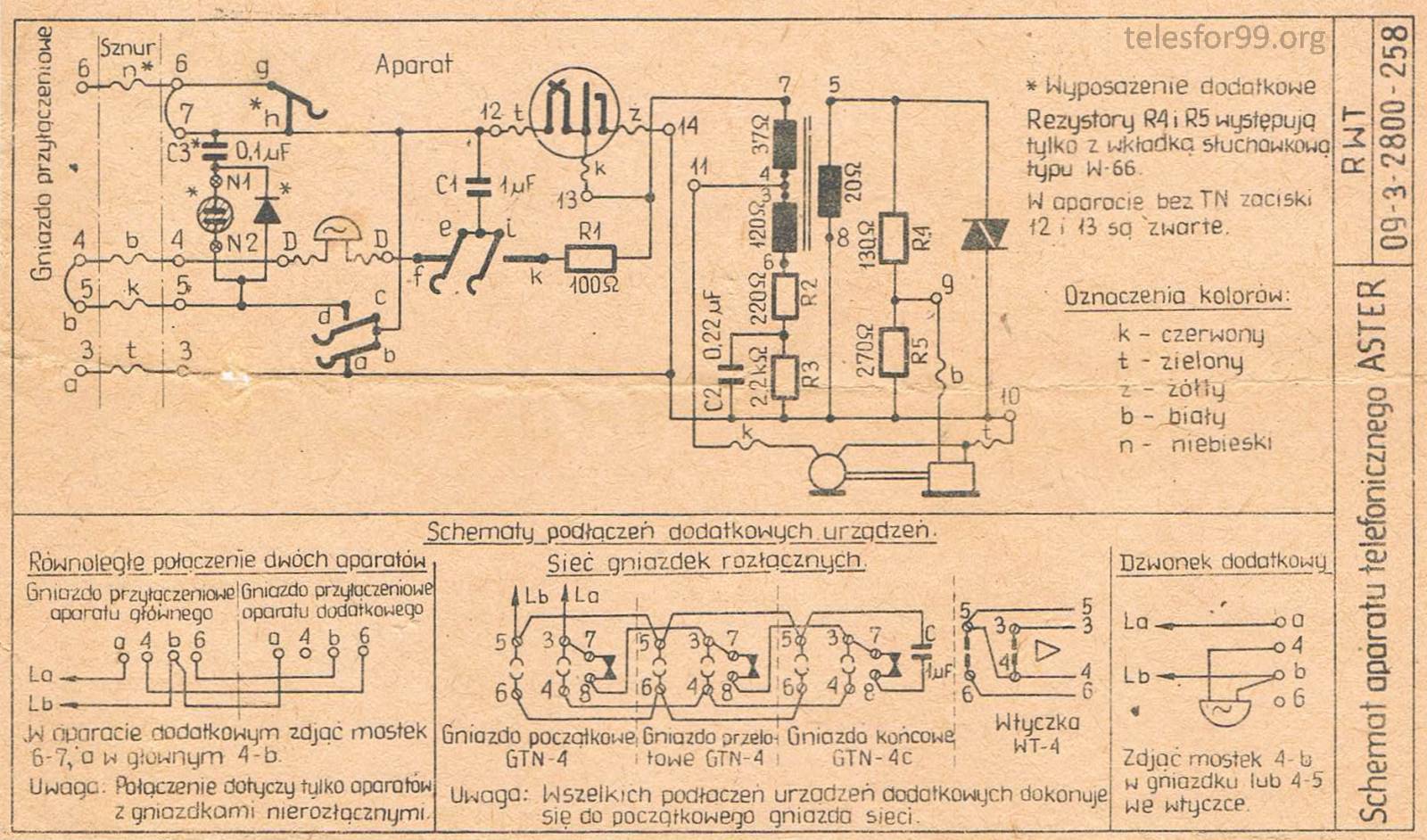
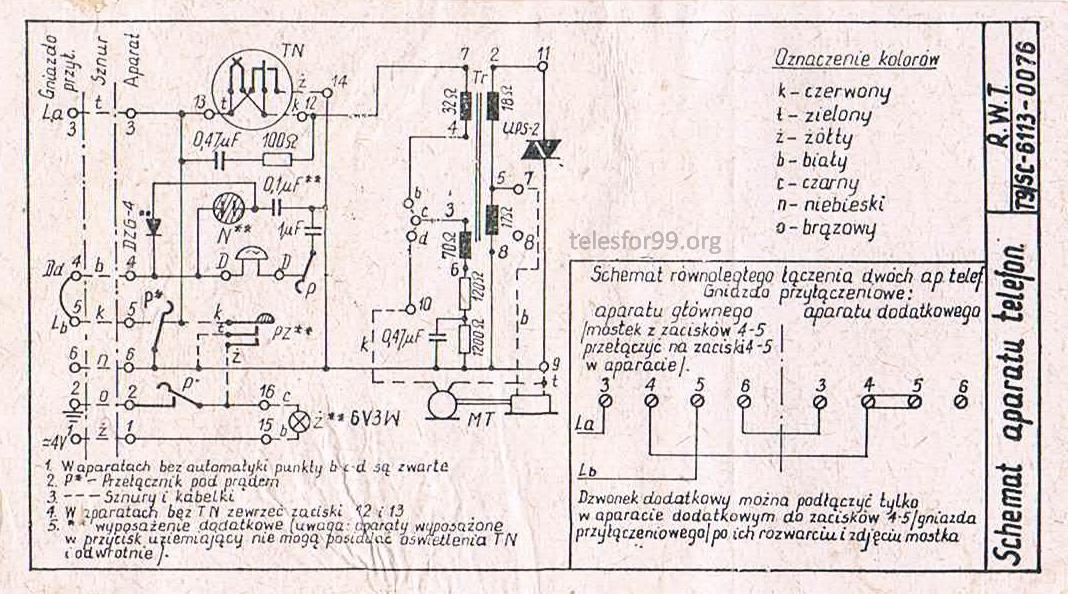
WT-4 (adopted as ВТ-4 in the USSR) is a Polish telephone plug used to connect telephone sets to the network. Introduced in the second half of the 20th century and adopted in several Eastern Bloc countries as a standard[citation needed]. It has since been replaced by the RJ-11 standard. Sockets are labelled with the text GTN-4 (РТШ-4 in the USSR).
WT-4 plugs consist of 4 metal pins with an additional plastic pin at the bottom to prevent inserting the plug the wrong way round. When the plug is inserted into a socket, the plastic pin also disconnects a 1μF capacitor built into the socket. When connected, the capacitor simulates a telephone set with the handset hung up. This allows for the testing of the line even when the subscriber doesn't have a telephone connected to the network. In the mid-1990s, installations of WT-4 plugs began to be phased out, and the standardized shape of the socket was used to install RJ-11 connectors instead.

A rare 6-pin version also existed, called WT-6. Extra pins (numbered with the missing 1 and 2) were located between the existing pins 3 and 5, and 4 and 6, respectively. These extra pins were used for powering telephone sets with illuminated rotary dials, as well as some more advanced telephone installations.
| Socket | Socket with capacitor | Plug | Number of pins | |||
|---|---|---|---|---|---|---|
| BN | GOST | BN | GOST | BN | GOST | |
| GTN-4 | РТШ-4 (RTSh-4) | GTN-4c | РТШК-4 (RTShK-4) | WT-4 | ВТ-4 (VT-4) | 4 |
| GTN-6 | РТШ-6 (RTSh-6) | GTN-6с | РТШК-6 (RTShK-6) | WT-6 | ВТ-6 (VT-6) | 6 |
| Function, notes | Pin number in
GTN (RTSh) socket |
Function, notes | ||
|---|---|---|---|---|
| Ground. Used in sets with grounding buttons when working with internal telephone exchanges | 6 (1) |  |
5 (а) | Telephone line B, in GTN-4c connected with capacitor |
| GTN-6 advanced features. Not present in GTN-4 | 2 (3) | 1 (4) | GTN-6 advanced features. Not present in GTN-4 | |
| In a plug bridged with pin 5 (а). Used to connect an additional bell when phone plug is connected | 4 (2) | 3 (б, b) | Telephone line A | |
| In GTN-4c connected with capacitor | 8 (5) | Socket switch pins, disconnected on plug insertion | 7 (6) | Permanently connected with pin 3 (б) in socket |