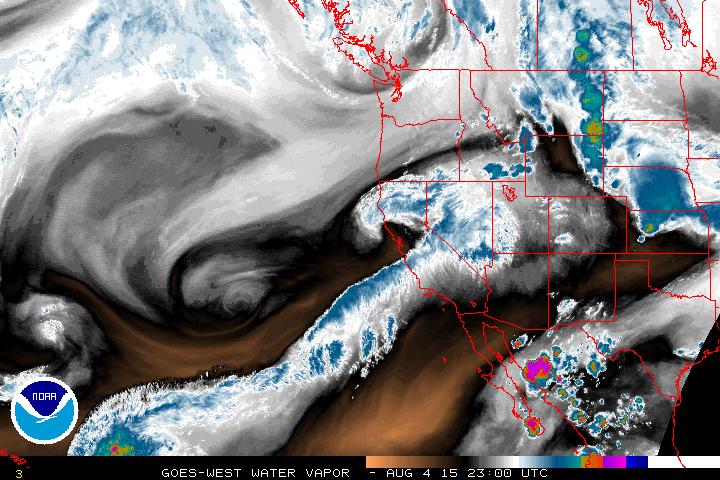
A California hurricane is a tropical cyclone that affects the state of California. Usually Pacific hurricanes weaken a lot before getting to land. O Normally, rainfall is the only effect that Pacific hurricanes have on California. Sometimes, this rainfall is strong enough to cause flooding and some damage. For example, floods from Hurricane Kathleen in 1976 created damages scattered across the southeastern California area and killed three people.
Hurricanes rarely hit because of the fact that California has cold sea surface temperatures off the California coastline and the California Current.
Tropical cyclones usually need sea surface temperatures above 26.5 °C (80 °F) with a depth of 50 meters (160 feet) to survive. But the waters off the California coast are too cold for tropical cyclones, even during the summer. Normally, the waters' temperatures do not get above 17 °C (70 °F), although El Nino effects may periodicly warm the pacific waters off of the California coastline.
Also, the California Current moves down from the northwestern US coast to the southern tip of the Baja California peninsula, which is the opposite in which Northern Hemisphere tropical cyclones move. While a few tropical cyclones may hit the southern and central areas of the Baja California peninsula, they do not make landfall any farther north than that.[source?]
This section needs to be updated. (July 2026) |

Because of a possible threat of California hurricanes in the future and from the damaging effects of a 1858 tropical storm, the National Weather Service created tropical cyclone warning stations across the southern California coast. But because of the fact that Pacific hurricanes rarely affected California, the idea of a warning station was later brought down.
The most serious damage from a California hurricane would be from heavy rainfall rather than hurricane force-winds or a storm surge, although distant hurricanes may still create heavy surf, maybe hurting or killing people.