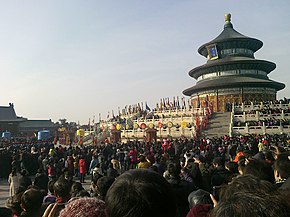
Shangdi (Chinese: 上帝; pinyin: Shàngdì; Wade–Giles: Shang Ti), also written simply, "Emperor" or "God" (Chinese: 帝; pinyin: Dì), is the ancient Chinese name for God in Shenism.
Although the name has shang in it, it is a different word in Chinese from Shang dynasty and has a different tone.
In Shenism and other Chinese religions, Tian is usually used to refer to God. But "Shangdi" is used by some groups, including some Confucian philosophers, and Protestant Christianity. However, both Tian and Shangdi are both names used to refer to the same Supreme Being.

