1001 to 1099
1011
1011 = 3 × 337. It is a Harshad number in bases 5, 10, 15, 20, 25, 30, 35, 40, 45, 50, 55, 60, 65, 70, 75 (and 202 other bases). It is the largest natural number n such that 2n contains 101 and does not contain 11011. There are 1011 partitions of 1 into reciprocals of positive integers <= 16 Egyptian fraction.
1028
1028 = 22 × 257. It is sum of totient function for first 58 integers.
1029
There are 1029 primes <= 213.
1033
1033 is a prime number and an emirp. It forms a twin prime pair with 1031.
1039
1039 is a Chen prime and a Lucky prime. There are 1039 partitions of 30 that do not contain 1 as a part.
1040
1040 = 24 × 5 × 13. There are 1040 pieces that could be seen in a 6 × 6 × 6 × 6 Rubik's Tesseract.
1046
1046 = 2 × 523. It is a coefficient of f(q), the 3rd order mock theta function.
1060
1060 = 22 × 5 × 53. It is the sum of the first twenty-five primes from 2 through 97 (the number of primes less than 100) and the sixth sum of 10 consecutive primes, starting with 23 through 131.
1061
1061 is a prime number, an emirp, and a twin prime with 1063. There are 1061 prime numbers between 1000 and 10000 (or, number of four-digit primes in decimal representation).
1063
1063 is a prime number, a super-prime, a twin prime with 1061, and the sum of seven consecutive primes (137 + 139 + 149 + 151 + 157 + 163 + 167)
1069
1069 is a prime number and an emirp.
1076
1076 = 22 × 269. There are 1076 strict trees weight 11.
1078
1078 = 2 × 72 × 11. It is an Euler transform of negative integers.
1086
1086 = 2 × 3 × 181. It is a Smith number and the sum of totient function for the first 59 integers.
1093
1093 is a twin prime with 1091. Together with 1091 and 1097, it forms a prime triplet. It is a happy prime and a star prime. It is also the smallest Wieferich prime. 1093 is a repunit prime in base 3 because:

1100 to 1199
1102
1102 = 2 × 19 × 29. It is the sum of the totient function for the first 60 integers.
1113
1113 = 3 × 7 × 53. There are 1113 strict partitions of 40.
1117
1117 is a Chen prime. There are 1117 diagonally symmetric polyominoes with 16 cells.
1118
1118 = 2 × 13 × 43. There are 1118 unimodular 2 × 2 matrices having all terms in {0,1,...,21}.
1122
1122 = 2 × 3 × 11 × 17. It is a pronic number.
1126
1126 = 2 × 563. There are 1126 2 × 2 non-singular integer matrices with entries from {0, 1, 2, 3, 4, 5}.
1127
1127 = 72 × 23. It is the maximum number of pieces that can be obtained by cutting an annulus with 46 cuts.
1161
1161 = 33 × 43. It is the sum of the first twenty-six primes.
1162
1162 = 2 × 7 × 83. It is the sum of the totient function for the first 61 integers and a pentagonal number.
1164
1164 = 22 × 3 × 97. There are 1164 chains of multisets that partition a normal multiset of weight 8, where a multiset is normal if it spans an initial interval of positive integers
1169
1169 = 7 × 167. It is a highly cototient number
1173
1173 = 3 × 17 × 23. There are 1173 simple triangulations on a plane with 9 nodes.
1174
1174 = 2 × 587. There are 1174 widely totally strongly normal compositions of 16. (sequence A332337 in the OEIS).
1175
1175 = 52 × 47. It is the maximum number of pieces that can be obtained by cutting an annulus with 47 cuts.
1178
1178 = 2 × 19 × 31. There are 1178 surface points on a cube with edge-length 15.
1179
1179 = 32 × 131. There are 1179 different permanents of binary 7 by 7 matrices.
1182
1182 = 2 × 3 × 197. There are 1182 necklaces possible with 14 beads of 2 colors (that cannot be turned over).
1186
1186 = 2 × 593. There are 1186 diagonally symmetric polyominoes with 15 cells.
1190
1190 = 2 × 5 × 7 × 17. It is a pronic number. Building a 28-tier house of cards requires 1190 cards.
1191
1191 = 3 × 397 = 352 - 35 + 1 = H35, the 35th Hogben number.
1192
1192 = 23 × 149. It is the sum of the totient function for the first 62 integers.
1198
1198 = 2 × 599. It is a centered heptagonal number.
1200 to 1299
1203
1203 = 3 × 401. It is the smallest number greater than 1000 in the coordinating sequence for the (2,6,∞) tiling of the hyperbolic plane.
1204
1204 = 22 × 7 × 43. It is the magic constant for a 7 × 7 × 7 magic cube.
1205
1205 = 5 × 241. There are 1205 partitions of 28 such that the number of odd parts is a part
1208
1208 = 23 × 151. There are 1208 strict chains of divisors starting with the superprimorial A006939(3).
1213
1213 is a prime number and an emirp.
1214
1214 = 2 × 607. It is a spy number and the sum of the first 39 composite numbers.
1216
1216 = 26 × 19. It is a nonagonal number
1220
1220 = 22 × 5 × 61. It is a zero of Mertens function. There are 1220 binary vectors of length 16 containing no singletons.
1224
1224 = 23 × 32 × 17. There are 1224 edges in the join of two cycle graphs, both of order 34.
1225
1225 = 52 × 72 = 352. It is the smallest number greater than 1 to be a triangular number, a square number and a hexagonal number. It is the second square triangular number greater than 1. It is the 49th triangular number, the 35th square number, the 25th hexagonal number, a centered octagonal number, a 29-gonal number, a 60-gonal number, and a 124-gonal number. It is the sum of 5 consecutive odd cubes:
1225 = 13 + 33 + 53 + 73 + 93.
1226
1226 = 2 × 613. There are 1226 rooted identity trees with 15 nodes.
1228
1228 = 22 × 307. It is the sum of the totient function for the first 63 integers.
1230
1230 = 2 × 3 × 5 × 41 = T(9, 6), the Mahonian number.
1231
1231 is a prime number and an emirp.
1232
1232 = 24 × 7 × 11. There are 1232 labeled ordered set of partitions of a 7-set into odd parts.
1240
1240 = 23 × 5 × 31. It is a square pyramidal number.
1244
1244 = 22 × 311. There are 1244 complete partitions of 25.
1245
1245 = 3 × 5 × 83. There are 1245 labeled spanning intersecting set-systems on 5 vertices.
1247
1247 = 29 × 43. It is a pentagonal number.
1257
1257 = 3 × 419. There are 1257 lattice points inside a circle of radius 20.
1260
1260 = 22 × 32 × 5 × 7. It is a pronic number, the smallest vampire number, the 16th highly composite number, and the sum of the totient function for the first 64 integers. There are 1260 strict partitions of 41.
1261
1261 = 13 × 97. It is a star number and a zero of Mertens function.
1264
1264 = 24 × 79. It is the sum of the first 27 primes.
1265
1265 = 5 × 11 × 23. There are 1265 rooted trees with 43 vertices in which vertices at the same level have the same degree.
1266
1266 = 2 × 3 × 211. It is a centered pentagonal number and a zero of Mertens function.
1269
1269 = 33 × 47. Completing 11 revolutions in the Spiral of Theodorus requires 1269 triangles.
1277
1277 is a prime number. It is the start of a prime constellation of length 9 (a "prime nonuple").
1278
1278 = 2 × 32 × 71. There are 1278 Narayana's cows and calves after 20 years.
1280
1280 = 28 × 5. There are 1280 parts in all compositions of 9.
1283
1283 is a safe prime.
1284
1284 = 22 × 3 × 107 = 641 + 643, the sum of a twin prime pair.
1285
1285 = 5 × 257. There are 1285 free nonominoes.
1286
1286 = 2 × 643. There are 1286 inequivalent connected planar figures that can be formed from five 1 X 2 rectangles (or dominoes) such that each pair of touching rectangles shares exactly one edge, of length 1, and the adjacency graph of the rectangles is a tree.
1289
1289 is Sophie Germain prime and a twin prime with 1291. 1289 is a deficient number because the sum of all its positive divisors (except itself) totals less than 1289. 1289 is an evil number because it has an even number of 1's contained in its binary expansion.
1291
1291 is a twin prime with 1289.
1296
1296 = 24 × 34 = 64 = 362. It is the sum of the cubes of the first eight positive integers:
13 + 23 + 33 + 33 + 43 + 53 + 63 + 73 + 83 = 1296.
There are 1296 rectangles on a normal 8 × 8 chessboard. There are 1296 combinations of 2 alphanumeric characters.
1297
1297 is a super-prime, a pinwheel number, and a zero of Mertens function.
1300 to 1399
1300
1300 = 22 × 52 × 13. It is a zero of Mertens function and the smallest even odd-factor hyperperfect number. It is the sum of the first 4 fifth powers:
1300 = 15 + 25 + 35 + 45.
1308
1308 = 22 × 3 × 109. It is the sum of the totient function for the first 65 integers.
1327
1327 is the smallest prime number preceding a prime gap of 34.
1328
1328 = 24 × 83. It is the sum of the totient function for the first 66 integers.
1342
1342 = 2 × 11 × 61 =  .
.
1346
1346 = 2 × 673. There are 1346 locally disjointed rooted trees with 10 nodes.
1367
1367 is a safe prime and a balanced prime. It is the sum of three, nine, and eleven consecutive primes: (449 + 457 + 461, 131 + 137 + 139 + 149 + 151 + 157 + 163 + 167 + 173, and 101 + 103 + 107 + 109 + 113 + 127 + 131 + 137 + 139 + 149 + 151),
1371
1371 = 3 × 457. It is the sum of the first 28 primes.
1377
1377 = 34 × 17. It is the maximal number of pieces that can be obtained by cutting an annulus with 51 cuts
1380
1380 = 22 × 3 × 5 × 23. There are 1380 8-step mappings with 4 inputs.
1384
1384 = 23 × 173 = 
1388
1388 = 22 × 347. Because 1388 = 4 × 192 - 3 × 19 + 1, is on the x-axis of Ulams spiral.
1394
1394 = 2 × 17 × 41. It is the sum of the totient function for the first 67 integers.
1399
1399 is a prime number and an emirp.
1400 to 1499
1403
1403 = 23 × 61. It is the smallest number x such that M(x) = 11, where M() is Mertens function
1409
1409 is a super-prime, a Sophie Germain prime, and a Proth prime.
1418
1418 = 2 × 709. It is the smallest number x such that M(x) = 13, where M() is Mertens function
1426
1426 = 2 × 23 × 31. It is a pentagonal number and the sum of the totient function for the first 68 integers. There are 1426 strict partitions of 42.
1428
1428 = 22 × 3 × 7 × 17. There are 1428 complete ternary trees with 6 internal nodes or, equivalently, 18 edges.
1436
1436 = 22 × 359. It is the discriminant of a totally real cubic field.
1439
1439 is a Sophie Germain prime and a safe prime.
1451
1451 is a Sophie Germain prime.
1452
1452 = 22 × 3 × 112. It is the first Zagreb index of the complete graph K12.
1453
1453 is a Sexy prime with 1459.
1458
1458 = 2 × 36. It is the maximum determinant of an 11 by 11 matrix of zeroes and ones and a 3-smooth number.
1458 is one of three numbers which, when its base 10 digits are added together, produces a sum which, when multiplied by its reversed self, yields the original number:
- 1 + 4 + 5 + 8 = 18
- 18 × 81 = 1458
- The only other non-trivial numbers with this property are 81 and 1729, as well as the trivial solutions 1 and 0. It was proven by Masahiko Fujiwara.
1459
1459 is a Sexy prime with 1453 and a Pierpont prime. It is the sum of nine consecutive primes:
1459 = 139 + 149 + 151 + 157 + 163 + 167 + 173 + 179 + 181.
1462
1462 = 2 × 17 × 43. Because 1462 = (35 - 1) × (35 + 8), it is the first Zagreb index of the wheel graph with 35 vertices
1470
1470 = 2 × 3 × 5 × 72. It is the sum of the totient function for the first 69 integers.
1480
1480 = 23 × 5 × 37. It is the sum of the first 29 primes.
1481
1481 is a Sophie Germain prime.
1486
1486 = 2 × 743. There are 1486 strict solid partitions of 19.
1492
1492 = 22 × 373. It is the discriminant of a totally real cubic field.
1493
1493 is a Stern prime.
1494
1494 = 2 × 32 × 83. It is the sum of the totient function for the first 70 integers.
1500 to 1599
1500
1500 = 22 × 3 × 53. It is the hypotenuse of three different Pythagorean triangles.
1501
1501 = 19 × 79. It is a centered pentagonal number.
1503
1503 = 32 × 167. Completing 12 revolutions of the Spiral of Theodorus requires 1503 triangles.
1511
1511 is a Sophie Germain prime and a balanced prime.
1513
1513 = 17 × 89. It is a centered square number.
1520
1520 = 24 × 5 × 19. It is a pentagonal number. It forms a Ruth–Aaron pair with 1521 under the second definition.
1521
1521 = 32 × 132 = 392. It is a centered octagonal number. It forms a Ruth–Aaron pair with 1520 under the second definition.
1523
1523 is a super-prime, a safe prime, and a member of the Mian–Chowla sequence.
1525
1525 = 52 × 61. It is a heptagonal number.
1526
1526 = 2 × 7 × 109. There are 1526 conjugacy classes in the alternating group A27.
1532
1532 = 22 × 383. There are 1532 series-parallel networks with 9 unlabeled edges,
1537
1537 = 29 × 53. It is a Keith number.
1539
1539 = 34 × 19. A maximum of 1539 pieces can be obtained by cutting an annulus with 54 cuts.
1540
1540 = 22 × 5 × 7 × 11. It is the 55th triangular number, a hexagonal number, a decagonal number, and a tetrahedral number.
1557
1557 = 32 × 173. There are 1557 graphs with 8 nodes and 13 edges.
1559
1559 is a Sophie Germain prime.
1564
1564 = 22 × 17 × 23. It is the sum of the totient function for the first 71 integers.
1572
1572 = 22 × 3 × 131. It is a member of the Mian–Chowla sequence.
1573
1573 = 112 × 13. It is the discriminant of a totally real cubic field.
1583
1583 is a Sophie Germain prime.
1588
1588 = 22 × 397. It is the sum of the totient function for the first 72 integers.
1593
1593 = 33 × 59. It is the sum of the first 30 primes.
1594
1594 = 2 × 797. It is the minimal cost of a maximum height Huffman tree of size 17.
1600 to 1699
1601
1601 is a Sophie Germain prime and a Proth prime.
1607, 1609, and 1613
1607, 1609, and 1613 form a prime triple.
1619
1619 is a safe prime.
1624
1624 = 23 × 7 × 29. There are 1624 squares in the Aztec diamond of order 28.
1625
1625 = 53 × 13. It is a centered square number.
1626
1626 = 2 × 3 × 271. It is a centered pentagonal number.
1633
1633 = 23 × 71. It is a star number.
1637
1637 is a prime island: it is the smallest prime whose adjacent primes are exactly 30 apart.
1639
1639 = 11 × 149. It is a nonagonal number.
1646
1646 = 2 × 823. There are 1646 graphs with 8 nodes and 14 edges.
1649
1649 = 17 × 97. It is a highly cototient number and a Leyland number using 4 and 5: 1649 = 45 + 54.
1651
1651 = 13 × 127. It is a heptagonal number.
1660
1660 = 22 × 5 × 83. It is the sum of the totient function for the first 73 integers.
1665
1665 = 32 × 5 × 37. It is a centered tetrahedral number.
1669
1669 is a super-prime. It is the smallest prime with a gap of exactly 24 to the next prime.
1679
1679 = 23 × 73. It is a highly cototient number.
1681
1681 = 412 = 402 + 40 + 41. It is the smallest number yielded by the formula n2 + n + 41, where n is a natural number, that is not a prime. It is also a centered octagonal number.
1682 and 1683
1682 and 1683 form a Ruth–Aaron pair under the first definition.
1696
1696 = 25 × 53. It is the sum of the totient function for the first 74 integers.
1700 to 1799
1710
1710 = 2 × 32 × 5 × 19. A maximum of 1710 pieces can be obtained by cutting an annulus 57 times.
1717
1717 = 17 × 101. It is a pentagonal number.
1720
1720 = 23 × 5 × 43. It is the sum of the first 31 primes.
1721
1721 is a twin prime with 1723.
1723
1723 is a twin prime with 1721. It is also a super-prime.
1736
1736 = 23 × 7 × 31. It is the sum of the totient function for the first 75 integers.
1740
1740 = 22 × 3 × 5 × 29. There are 1740 squares in the Aztec diamond of order 29.
1741
1741 is a super-prime and a centered square number.
1747
1747 is a balanced prime.
1750
1750 = 2 × 53 × 7. It is the hypotenuse of three different Pythagorean triangles with integer side lengths.
1756
1756 = 22 × 439. It is a centered pentagonal number.
1757
1757 = 7 × 251. Completing 13 revolutions around the Spiral of Theodorus requires 1757 triangles.
1769
1769 = 29 × 61. A maximum of 1769 pieces can be obtained by cutting an annulus with 58 times.
1771
1771 = 7 × 11 × 23. It is a tetrahedral number.
1772
1772 = 22 × 443. It is a centered heptagonal number and the sum of the totient function for the first 76 integers.
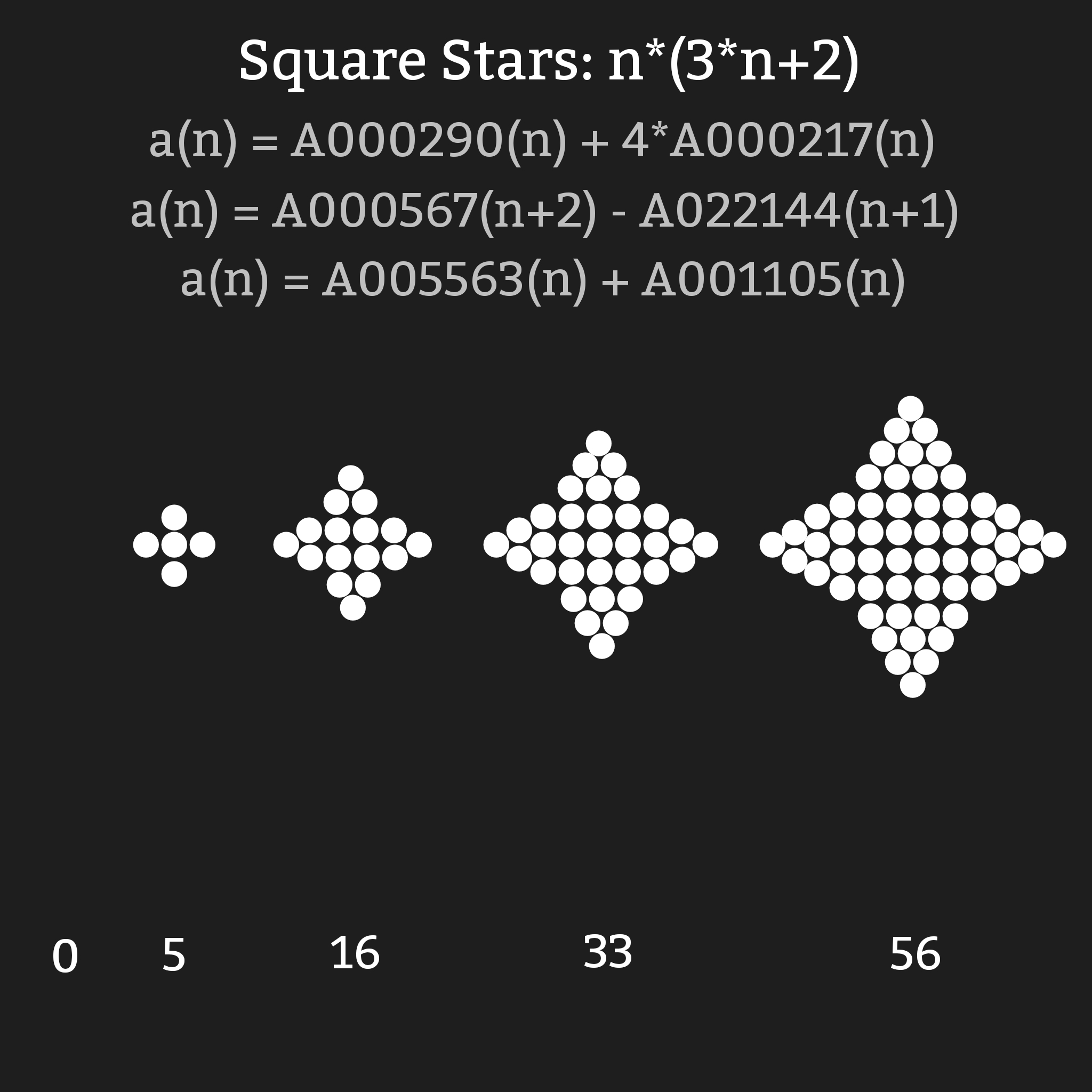
1776
1776 = 24 × 3 × 37. It is the 24th square star number. A total of 1776 pieces could be seen in a 7 × 7 × 7 × 7 Rubik's Tesseract.
1782
1782 = 2 × 34 × 11. It is a heptagonal number.
1785
1785 = 3 × 5 × 7 × 17. It is a square pyramidal number.
1787
1787 is a super-prime. It is the sum of eleven consecutive primes: 1787 = 137 + 139 + 149 + 151 + 157 + 163 + 167 + 173 + 179 + 181 + 191.
1794
1794 = 2 × 3 × 13 × 23. It is a nonagonal number.
1800 to 1899
1801
1801 is a cuban prime. It is the sum of five consecutive primes (349 + 353 + 359 + 367 + 373) and nine consecutive primes 179 + 181 + 191 + 193 + 197 + 199 + 211 + 223 + 227).
1811
1811 is a Sophie Germain prime.
1820
1820 = 22 × 5 × 7 × 13. It is a pentagonal number and a pentatope number.
1821
1821 = 3 × 607. It is a member of the Mian–Chowla sequence.
1831
1831 is the smallest prime number with a gap of exactly 16 to the next prime, 1847.
1834
1834 = 2 × 7 × 131. It is an octahedral number.
1837
1837 = 11 × 167. It is a star number.
1841
1841 = 7 × 263. It is the solution to the postage stamp problem with 3 denominations and 29 stamps.
1861
1861 is a prime number and a centered square number.
1862 and 1863
1862 and 1863 form a Ruth–Aaron pair under the second definition.
1870
1870 = 2 × 5 × 11 × 17. It is a decagonal number.
1871, 1873, 1877, and 1879
1871, 1873, 1877, and 1879 form a prime quadruple.
There are 1873 Narayana's cows and calves after 21 years.
1880
1880 = 23 × 5 × 47. It is the 10th element of the self convolution of Lucas numbers.
1889
1889 is a Sophie Germain prime and a highly cototient number.
1892
1892 = 22 × 11 × 43. It is a pronic number.
1896
1896 = 23 × 3 × 79. It is a member of the Mian-Chowla sequence.
1897
1897 = 7 × 271. It is a member of the Padovan sequence.
1900 to 1999
1907
1907 is a safe prime and a balanced prime.
1918
1918 = 2 × 7 × 137. It is a heptagonal number.
1926
1926 = 2 × 32 × 107. It is a pentagonal number.
1931
1931 is a Sophie Germain prime.
1933
1933 is a prime number and a centered heptagonal number.
1951
1951 is a cuban prime.
1956
1956 = 22 × 3 × 163. It is a nonagonal number.
1969
1969 = 11 × 179. It is the only number less than four million for which a "mod-ification" of the standard Ackermann Function does not stabilize
1980
1980 = 22 × 32 × 5 × 11. It is a pronic number and a highly abundant number, and it also has a greater aliquot sum than any smaller number.
1993
1993 forms a prime triplet with 1987 and 1999.