| Callicarpa | |
|---|---|
| Callicarpa dichotoma, the purple beautyberry | |
| Scientific classification | |
| Kingdom: | Plantae |
| Clade: | Tracheophytes |
| Clade: | Angiosperms |
| Clade: | Eudicots |
| Clade: | Asterids |
| Order: | Lamiales |
| Family: | Lamiaceae |
| Genus: | Callicarpa L. |
| Synonyms | |
| |
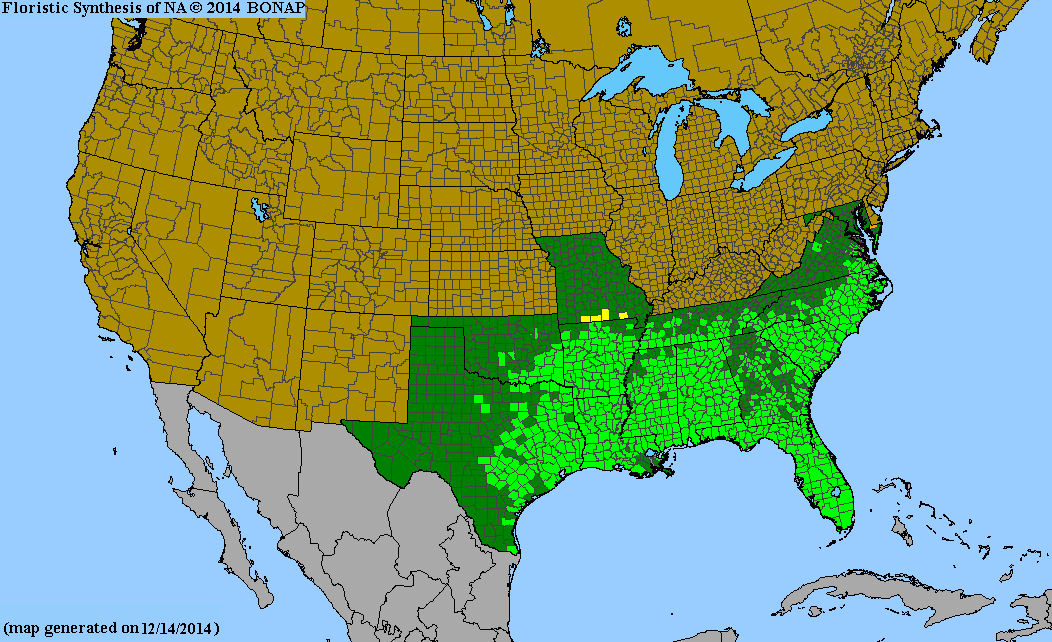
Callicarpa, commonly known as beautyberry, is a genus of shrubs and small trees in the family Lamiaceae. They are native to east and southeast Asia (where the majority of the species occur), Australia, Madagascar, south-eastern North America and South America.
The leaves are simple, opposite, usually 5-25 cm long. Its flowers are small, white to pink or light purple in color. They produce small clusters of purple drupes along their branches.
The temperate species are deciduous, the tropical species evergreen. The leaves are simple, opposite, and 5–25 cm long. The flowers are in clusters, white to pinkish. The fruit is, in botanical terms, a berry up to 5 mm diameter. They are pink to red-purple with a highly distinctive metallic lustre, and are very conspicuous in clusters on the bare branches after the leaves fall. The berries last well into the winter or dry season and are an important survival food for birds and other animals, though they will not eat them until other sources are depleted. The berries are highly astringent but are made into wine and jelly. Callicarpa species are used as food plants by the larvae of some Lepidoptera species in Asia including Endoclita malabaricus and Endoclita undulifer.
They are widely grown in gardens for their berries, which provide food for animals and birds during the winter. Additionally, some species are used in medicines for fever and rheumatism. It is also used as a mosquito repellent.
The Latin name callicarpa derives from the Greek κάλλος (kállos) 'beauty' and καρπός (karpós) 'fruit'.
American beautyberry has been used as a folk remedy to prevent mosquito bites. Four chemicals isolated from Callicarpa have been shown to act as insect repellents:borneol, callicarpenal, intermedeol, and spathulenol. The use of callicarpenal has been patented by the United States Department of Agriculture's Agricultural Research Service as a mosquito repellent.
As of March 2026[update], Plants of the World Online accepts the following 164 species: