NGC 4146
| NGC 4146 | |
|---|---|
 NGC 4146 imaged by SDSS | |
| Observation data (J2000 epoch) | |
| Constellation | Coma Berenices |
| Right ascension | 12h 10m 18.4s |
| Declination | 26° 25′ 54″ |
| Redshift | 0.021758 |
| Heliocentric radial velocity | 6523 km/s |
| Distance | 300 Mly (93 Mpc) |
| Apparent magnitude (V) | 13.59 |
| Characteristics | |
| Type | (R)SAB(s)ab |
| Size | ~156,200 ly (47.89 kpc) (estimated) |
| Apparent size (V) | 1.4′ × 1.3′ |
| Other designations | |
| UGC 07163, CGCG 158-036, MCG +05-29-028, PGC 038721 | |
NGC 4146 is a spiral galaxy located 300 million light-years away in the constellation Coma Berenices. It was discovered on April 6, 1785, by astronomer William Herschel. NGC 4146 is a field galaxy and is part of the Coma Supercluster.
NGC 4146 is a type 2 seyfert galaxy, and is host to a supermassive black hole with an estimated mass of 4.1 × 10⁸ M☉.
Supernova
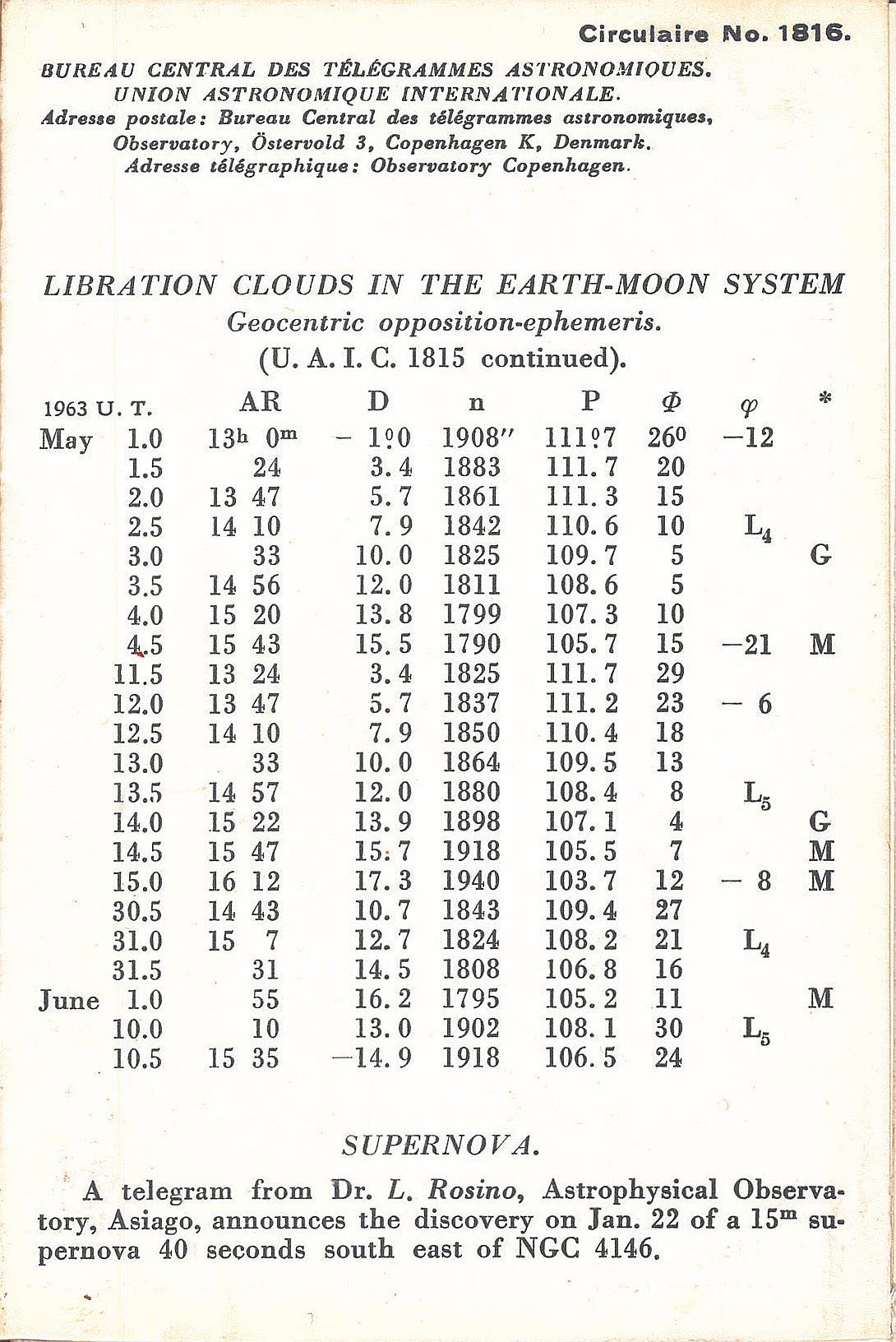
One supernova has been observed in NGC 4146. SN 1963D (type unknown, mag. 15.8) was discovered by Leonida Rosino on January 22, 1963.
See also
References
- 1 2 3 4 5 6 7 8 9 10 "Results for object NGC 4146". NASA/IPAC Extragalactic Database. NASA and Caltech. Retrieved 2025-07-15.
- ↑ "Your NED Search Results". ned.ipac.caltech.edu. Retrieved 2025-07-18.
- ↑ "New General Catalog Objects: NGC 4100 - 4149". cseligman.com. Retrieved 2025-07-18.
- ↑ Gregory, S. A.; Thompson, L. A. (1978-06-15). "The Coma/A1367 supercluster and its environs". The Astrophysical Journal. 222: 784. Bibcode:1978ApJ...222..784G. doi:10.1086/156198. ISSN 0004-637X.
- ↑ Boselli, A.; Gavazzi, G.; Lequeux, J.; Buat, V.; Casoli, F.; Dickey, J.; Donas, J. (November 1997). "The molecular gas content of spiral galaxies in the Coma/A1367 supercluster". Astronomy and Astrophysics. 327: 522–538. ISSN 0004-6361.
- ↑ "NGC 4146". simbad.cds.unistra.fr. Retrieved 2025-07-18.
- ↑ Arzoumanian, Zaven; Baker, Paul T.; Brazier, Adam; Brook, Paul R.; Burke-Spolaor, Sarah; Becsy, Bence; Charisi, Maria; Chatterjee, Shami; Cordes, James M.; Cornish, Neil J.; Crawford, Fronefield; Cromartie, H. Thankful; Decesar, Megan E.; Demorest, Paul B.; Dolch, Timothy (2021-06-01). "The NANOGrav 11 yr Data Set: Limits on Supermassive Black Hole Binaries in Galaxies within 500 Mpc". The Astrophysical Journal. 914 (2): 121. arXiv:2101.02716. Bibcode:2021ApJ...914..121A. doi:10.3847/1538-4357/abfcd3. ISSN 0004-637X.
- ↑ Rosino, Dr. L. (28 January 1963). "Supernova". International Astronomical Union Circular (1816). Observatory Copenhagen, IAU: 1. Retrieved 18 July 2025.
- ↑ "1963D | Transient Name Server". www.wis-tns.org. Retrieved 2025-07-18.