Wikipedia:Reference desk/Entertainment

of the Wikipedia reference desk.
Main page: Help searching Wikipedia
How can I get my question answered?
- Select the section of the desk that best fits the general topic of your question (see the navigation column to the right).
- Post your question to only one section, providing a short header that gives the topic of your question.
- Type '~~~~' (that is, four tilde characters) at the end – this signs and dates your contribution so we know who wrote what and when.
- Don't post personal contact information – it will be removed. Any answers will be provided here.
- Please be as specific as possible, and include all relevant context – the usefulness of answers may depend on the context.
- Note:
- We don't answer (and may remove) questions that require medical diagnosis or legal advice.
- We don't answer requests for opinions, predictions or debate.
- We don't do your homework for you, though we'll help you past the stuck point.
- We don't conduct original research or provide a free source of ideas, but we'll help you find information you need.
How do I answer a question?
Main page: Wikipedia:Reference desk/Guidelines
- The best answers address the question directly, and back up facts with wikilinks and links to sources. Do not edit others' comments and do not give any medical or legal advice.
November 4
stephen dillane macbeth (2005)
on the Wikipedia article for stephen dillane, it says he was in some sort of production of macbeth in 2005, but I couldn't find much on what this was, nor his role in it, what was this retelling of macbeth, what role did he play, and where could I watch it? Mdz10 (talk) 19:12, 4 November 2026 (UTC)
- This is a review of it in Variety. ~2026-46630-01 (talk) 19:18, 4 November 2026 (UTC)
- @Mdz10: It was Macbeth (A Modern Ecstasy), a CalArts Center for New Performance production directed by Travis Preston and performed by Stephen Dillane alone: he spoke the entire text of the play, every character in it, which is why the role column in his article says "Various" rather than "Macbeth". CalArts describes the staging as making "the entire performance text of Macbeth" into "a 'score' for a single performer", with a trio of musicians led by Vinny Golia and a set of sand and water by Christopher Barreca.
- It played at REDCAT in Los Angeles from late 2004 (Mark Swed reviewed it for the Los Angeles Times on 3 December 2004; Variety followed on 5 December), then at the Almeida Theatre in London in 2005, and at the Adelaide Festival and in Sydney in 2006. Dillane's 2006 Helpmann Award nomination for Best Actor in a Play was for it. On watching it: it was a stage production and I cannot find any commercial recording or stream of it; the CalArts project page carries no video, and the reviews are what survives. The 24 November 2004 Backstage interview with Dillane and Preston is the fullest account of the intent, and it is also where the subtitle is explained: "a modern ecstasy" is a phrase of Ross's describing Scotland after Macbeth takes the crown. SaoriWalks (talk) 21:42, 4 November 2026 (UTC)
November 5
Tony Curran
I just read the article about Tony Curran. While enwiki doesn't have his birthdate: dewiki and imdb state that he was born on 13. Dezember 1969. I know I can't cite neither, and googling didn't help. Maybe some of you can help finding a sources? Or some guidance, where I can look instead. Thanks. Maresa63 Talk 12:30, 5 November 2026 (UTC)
I had a look around. What is actually findable:
- The Herald, 9 October 2016, arts interview ("From Red Road to Hollywood Boulevard"): "Born in December 1969 in Glasgow's south side". A reliable source for month and year, and it matches the Holyrood Secondary / postman details, but it gives no day. Under WP:DOB that supports "December 1969" and nothing finer.
- Contemporary Theatre, Film and Television (Gale) carries an entry reading "Born December 13, 1969 (some sources cite 1968), in Glasgow, Scotland", reproduced at Encyclopedia.com. Note that it hedges the year itself. It is likely the ancestor of the 13 December date in dewiki and IMDb, which makes it the reason the date circulates rather than proof of it. If you want to cite the full date, the printed Gale volume (check library holdings) is stronger than the online mirror.
- Places a full date might appear in citable form: Royal Conservatoire of Scotland graduation records (he graduated there in 1993), BFI person pages, National Library of Scotland theatre-programme collections (The Soldier's Tale, Waiting for Godot), and Scottish Youth Theatre's 1985 cohort (he says he and Gerard Butler were there at 14).
The short version: full date needs a published reliable source, so if "December 1969" is all you can document, that is all the article should say. dewiki having the full date does not itself get enwiki there. SaoriWalks (talk) 21:50, 5 November 2026 (UTC)
- @SaoriWalks Thank you for your efforts. I will leave the article as it is for now. Maybe I'll put something on the TP and link to this very informative thread. And I think dewiki just got the date from IMDb. Maresa63 Talk 13:06, 6 November 2026 (UTC)
November 8
"Split" constructor in Formula One for chassis and bodywork
Have there ever been cases in Formula One history where the chassis and the bodywork of a car were built by different entities? Maybe a privateer team building a new body on the chassis acquired from an established constructor? --KnightMove (talk) 10:37, 8 November 2026 (UTC)
- I remember this as being relatively frequent in the golden age of privateers (roughly from the mid-1960s to the early 1980s). Those were basically "kit cars" built on an existing chassis. March used to supply those, and there may have been others; the buyers then tried to put together a competitive car starting from that base, with varying success. That's how Hesketh Racing got its start, for one. Xuxl (talk) 14:34, 9 November 2026 (UTC)
- Indeed, this helped, thank you.
- Do you know by any chance if nowadays the entrant & chassis constructor is also obliged to build the bodywork? Of could, for example, the engine manufacturer also take over the bodywork, if both sides want this? --KnightMove (talk) 07:33, 10 November 2026 (UTC)
- My sense is that today, F1 cars are so sophisticated that a competitive one cannot be built without huge investments in wind tunnel time to finagle the smallest details, and so on. I don't think you could achieve this while having two different entities build those two components. In any case, I'm not aware of anyone trying to do so and achieving any sort of success. Xuxl (talk) 23:19, 10 November 2026 (UTC)
- Sounds reasonable, thank you. --KnightMove (talk) 08:40, 11 November 2026 (UTC)
- My sense is that today, F1 cars are so sophisticated that a competitive one cannot be built without huge investments in wind tunnel time to finagle the smallest details, and so on. I don't think you could achieve this while having two different entities build those two components. In any case, I'm not aware of anyone trying to do so and achieving any sort of success. Xuxl (talk) 23:19, 10 November 2026 (UTC)
The Making of the Video Rhythm Divine" Enrique Iglesias (1999)
The Making of the Video (1999)
The "Making of the Video" episode for Enrique Iglesias's 1999 hit "Rhythm Divine" was featured on MTV's series *Making the Video* (Season 1, Episode 14), premiering on October 4, 1999.
Artist: Enrique Iglesias
Song: "Rhythm Divine" (from the album *Enrique*, 1999)
Director: Francis Lawrence
Starring: Enrique Iglesias and Claudia Mason
Dancers: Robbin Quevedo and Charleigh Bryant-Stelly
Locations: Filmed in the stunning landscapes of Hawaii, Malibu, and Chinatown, with behind-the-scenes glimpses showcased on MTV's Making the Video.
In this visually captivating music video, the passionate pursuit of Enrique Iglesias for the enchanting American supermodel Claudia Mason serves as a powerful symbol of ambition and desire.
Although controversy arose not from the song itself or its mesmerizing video but from a high-profile lip-syncing and vocal talent scandal months later, Iglesias's team stood resolute, affirming that live performances with a real band defined his artistry in concerts and U.S. television. Enrique humorously brushed off the incident, suggesting that if the tape was real, it captured him in a moment of spontaneity during a lively soundcheck, where the surrounding energy was so overwhelming he could hardly hear himself. ~2026-59318-30 (talk) 23:02, 8 November 2026 (UTC)
- Courtesy link: Making the Video#Season 1
- What do you expect us to do with the above unreferenced (and I suspect copyright-infringing) information? {The poster formerly known as 87.81.230.195} ~2026-56420-06 (talk) 01:17, 9 November 2026 (UTC)
November 9
Italian localization of LEGO Friends (1999 PC game)
Hello everyone,
I am researching the 1999 PC game "LEGO Friends", developed by Flipside Creative and published by LEGO Media for Windows 95/98 (the game centered around the girls' music band, not to be confused with the more recent LEGO Friends theme).
I am trying to figure out how the game was localized in Italy back then (for example see here: , ). Specifically:
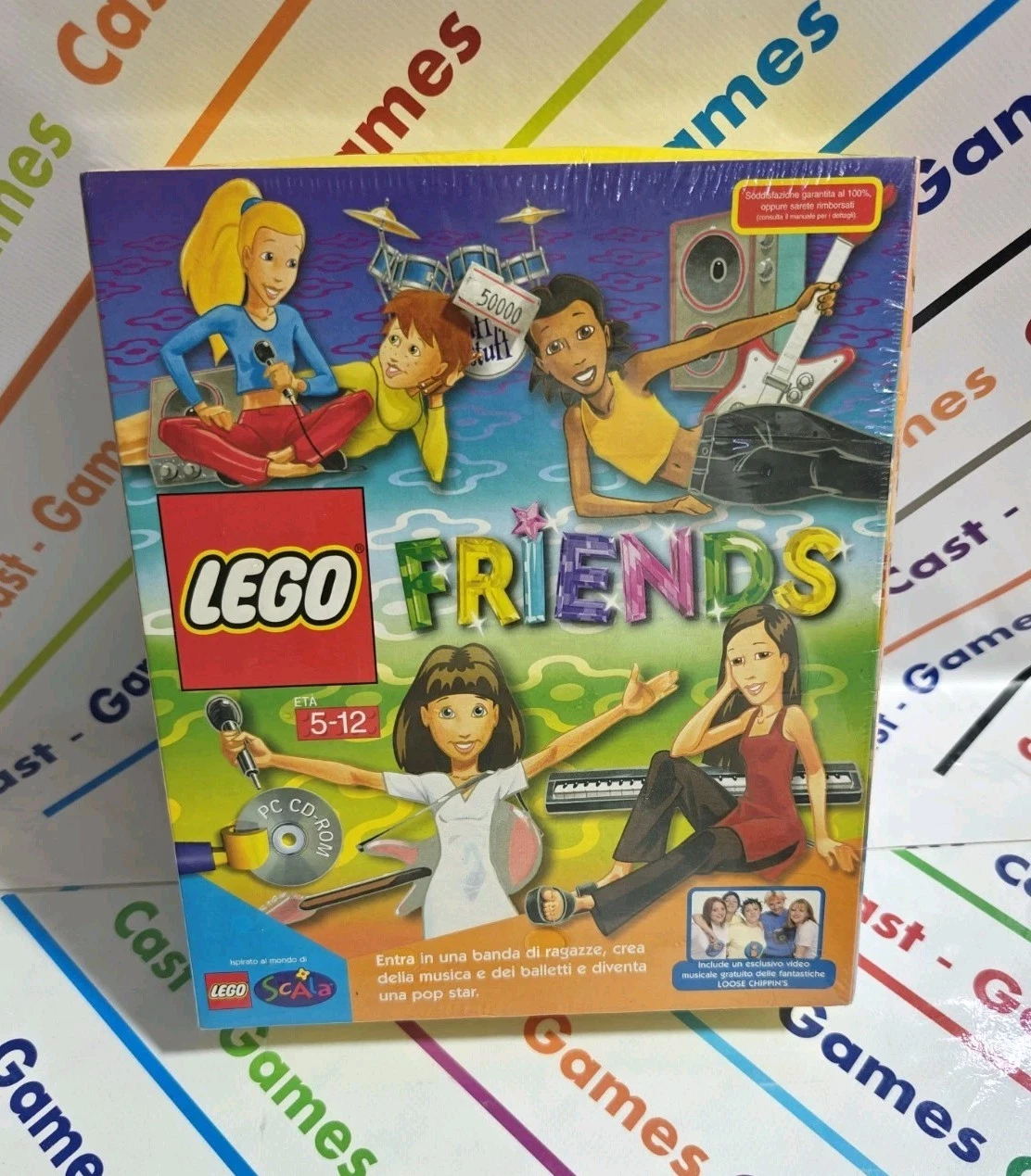
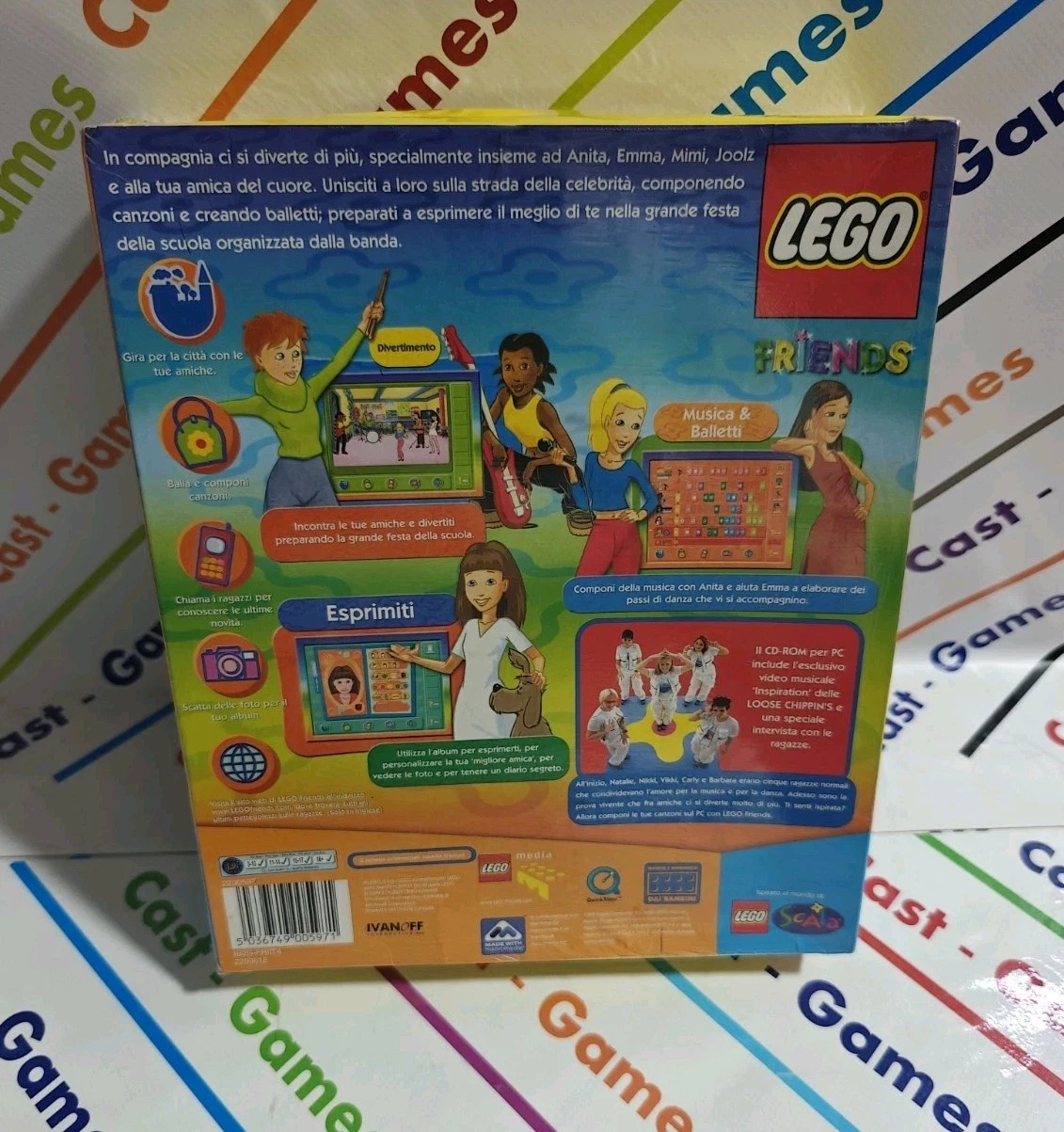
- Was the game fully dubbed in Italian (including voice acting and dialogue)?
- Or was it released with English audio and only Italian text/subtitles?
If anyone owns the original Italian big box release, CD-ROM, or has access to the game files to verify this, I would greatly appreciate your help!
Thank you in advance. DanielParoliere (talk) 19:36, 9 November 2026 (UTC)
November 10
What IS Slow Pitch Softball?
I wanted the answer to the question in the title. I searched for Slow Pitch Softball and ended up at Softball through a redirect, which was quite useless. All it told me was that the rules are different from Fast Pitch Softball but didn't tell me in what way. Can somebody, firstly, answer my question, and secondly, fix the confusion please? HiLo48 (talk) 06:15, 10 November 2026 (UTC)
- In the Softball article, under Gameplay, Pitching, there are sections for Slow pitch and Fastpitch. That's the core of the difference between the games, but not the only difference. It seems like the lead could at least include a summary distinguishing the two. ←Baseball Bugs What's up, Doc? carrots→ 12:13, 10 November 2026 (UTC)
- The short section on the softball page should be enough to answer your question. It's not really that complicated. In slow pitch, the pitch is lobbed. Depending on the league, I think the pitch normally has to released beneath the waist and reach a point higher than the batters head, but still land within something like 18" from the back of the plate to be a called strike. The picture on the article shows a typical mat that would be used to aid the umpire with making that call. It's all going to be league specific. --Onorem (talk) 12:19, 10 November 2026 (UTC)
- A more comprehensive look is available in Comparison of baseball and softball, which has separate columns for slow pitch and fast pitch. ←Baseball Bugs What's up, Doc? carrots→ 12:25, 10 November 2026 (UTC)
Newspapers
Before Internet age, were there any English-language newspapers in non-English-speaking countries in Europe? Or are there any such English-language newspapers aimed at native speakers of country’s main language (such as English-language newspapers in Germany aimed at German speakers)? --40bus (talk) 06:29, 10 November 2026 (UTC)
- Some British newspapers were exported to other European countries, to sell to British people living abroad or foreign people with a particular interest in British news. Places selling newspapers often had a few foreign (including British) titles. PiusImpavidus (talk) 10:16, 10 November 2026 (UTC)
- See Category:English-language newspapers by country, which contains four sub-categories pertaining to European countries, some of which likely include newspapers founded before the Internet. I doubt that this is a comprehensive list. For example, two English-language newspapers were published in Germany from 1945, and a third from 1950, though all three were produced for US military forces and their families stationed in Germany. {The poster formerly known as 87.81.230.195} ~2026-56420-06 (talk) 11:50, 10 November 2026 (UTC)
- Were, and are, there any English-language newspapers aimed at the native speakers of the country's main language then? --40bus (talk) 12:21, 10 November 2026 (UTC)
- As our article on the International Herald Tribune writes, by the 1990s "the majority of its readers were non-American". ‑‑Lambiam 20:33, 10 November 2026 (UTC)
- Another one not named on that category page is the 19th-century Galignani's Messenger, published in France.--Antiquary (talk) 13:09, 10 November 2026 (UTC)
- Were, and are, there any English-language newspapers aimed at the native speakers of the country's main language then? --40bus (talk) 12:21, 10 November 2026 (UTC)
November 12
Beyoncé, Shakira
In the opening of Beautiful Liar, the background singers sing "Be-yon-CÉ, Be-YON-cé, Sha-ki-RA, Sha-KI-ra..." - by these repetitions, they level the difference between the pronunciation of their names. Is there a name for this stylistic device? Are there other examples for this? --KnightMove (talk) 18:30, 12 November 2026 (UTC)
- I suppose one would call it wordplay, though I don't understand "level the difference between the pronunciation". One wordplay song that springs to mind is the Toe Knee Black Burn song, which ends "burn Tony black". Shantavira|feed me 09:04, 15 November 2026 (UTC)
- If the capitalized syllables are meant to indicate stress, this is not what I hear. I hear "Be-yon-CÉ, Be-yon-CÉ, Sha-ki-RA, Sha-ki-RA", with the same stress pattern repeated four times. What differs are the metric patterns (lengths of the syllables): ◡ ◡ –, – ◡ –, ◡ ◡ –, – ◡ –.
- The names of the singers are pronounced /biˈjɑnseɪ/ and /ʃəˈkɪərə/, with the same stress patterns but different metric patterns. Neither singer's name is sung with its usual stress pattern. The altered stress patterns and shifting metric patterns may have obfuscated the difference between their usual metric patterns.
- I don't think this form of obfuscation is a common device; at least, I can't think of other examples. What is a common and somewhat similar device is making more uniform by stylizing; for example, the human characters in the Peanuts strip have a very round head shape in common. Also the demi Lion rampant and the Elephant holding the crest of the coat of arms of Oxford have been made more uniform by scaling them down by different factors to the same size. ‑‑Lambiam 12:50, 15 November 2026 (UTC)
November 14
The Pokemon creatures?
Is there a page for the creatures called Pokemon? There is a list of them, but I can't find a general page. This may have been discussed before. user97104 talk•in solidarity 16:47, 14 November 2026 (UTC)
- There are several paragrpahs of introduction and explanation at List of Pokémon that appears to be all that Wikipedia has to say on the subject. You might find more on a dedicated Pokemon wiki. Eluchil404 (talk) 22:49, 14 November 2026 (UTC)
- Related: Talk:List_of_Pokémon#Article_split user97104 talk•in solidarity 23:16, 14 November 2026 (UTC)
November 15
Formula One constructors: With or without engine now?
In the past, the participants of the Formula One Constructors' Championship were defined by the combination of chassis constructor plus engine manufacturer. All teams that shared this specific combination contributed to the same constructor participant in the competition; all with the same chassis, but a different engine, were a different constructor. Therefore, e. g. in the 1959 Formula One season Cooper-Climax won the title, with wins of Stirling Moss for the private Rob Walker Racing Team helping the Cooper works team to win. Other teams with Cooper chassis and other engine like Cooper-Maserati were a different participant in the championship. In the 1960 Formula One season, overall three different Cooper contestants have scored points. In the 1983 Formula One season, Williams switched the engine manufacturer for the last race; in consequence, Williams-Ford was 4th in the championship with 36 points and Williams-Honda 11th with 2 points. They were different contestants!
However, today it seems the engine manufacturer has totally vanished from the definition of the participants. The official Formula One webpage lists the teams as Red Bull Racing, McLaren etc., not mentioning the engine manufacturer, as do all other notable score lists I could find. Does this mean: If e.g. Williams would again decide to switch engines during the season, from Mercedes to, say, Renault, then still all their points would be added up in the constructors championship? Or would Williams-Mercedes and Wiliams-Renault be different participants, as it was the case in the past?
In any case, what is the official name of the respective participants in the constructors' championship, e.g. in the case of McLaren? --KnightMove (talk) 11:39, 15 November 2026 (UTC)
- When the chassis constructor also builds (actually or nominally, by re-badging) their cars' engines, the engine manufacturer is not specified, so one doesn't say, for example, Ferrari-Ferrari.
- The webpage you link is a table that (like many other similar ones) deliberately simplifies the Racing Teams' names, it is not an official statement of those names in full.
- The Racing Team (or 'Entrant') and the Constructor are two different legal entities, with different names. If you look at, for example the relevant table in our own article for this year's Championship, you will see that the Constructors' column does name the engine supplier where that differs from the chassis designer. This table also lists the Entrants' official names.
- (This is in part a legacy from the era when a Constructor could enter their own team into the competition, and also sell some of their cars to other unrelated teams, so that the same model car might be raced by several different teams. Originally, all racing teams were technically private enterprises who merely purchased their cars from a manufacturer (if they did not literally build their own), but quite quickly, seeing the publicity value, manufacturers 'adopted' such teams or formed their own 'in-house'. Several current Entrants are ultimately descended from such 'private' racing teams.)
- Technically, the Constructor designs the chassis but does not necessarily build it: another company can do it for them – Dallario once did so for some F1 teams, most recently for Hispania (HRT) in 2010; they are also heavily involved in the design and production of the current Haas F1 team's cars. {The poster formerly known as 87.81.230.195} ~2026-56420-06 (talk) 13:33, 15 November 2026 (UTC)
- This help a lot to deepen general understanding of the topic, thank you. But I am afraid it does not help to answer my question as such.
- I quote FIA 2026 F1 Regulations, Section A: General Regulatory Provisions, A2.1.4 b: "The Constructors’ Championship title will be awarded to the F1 Team that has scored the highest number of points... If an F1 Team using a Power Unit that it does not manufacture wins the Constructors’ Championship title, the Constructors’ Championship title will be awarded to the F1 Team."
- This does not say anything about switching the power units would split the cometing team, which happened another time e.g. in 1985: Tyrrell switched from Ford to Renault, so Tyrrell-Ford and Tyrrell-Renault were two different competitors in the championship.
- Has this rule been abandonned? If yes, when? If no - where is it? --KnightMove (talk) 19:44, 15 November 2026 (UTC)
- I don't know, but in the current era it is inconceivable that a team/constructor would switch engine suppliers mid-season. Modern F1 cars are so intricately designed with integrated chassis, engine and bodywork (not to mention electronics and computerised control systems and software) that such a switch would require at minimum weeks of redesign, and manufacture of new parts, and could not be sufficiently tested to bring the result up to a competitive level because during the season testing outside of racing is severely restricted by the regulations. Moreover, contracts between Teams/Constructors and engine suppliers would likely not permit such a switch, so a team that attempted it would likely not be allowed to race.
- The last time anything like this happened is when Honda abruptly withdrew from Formula 1 in December 2008 (i.e. after the 2008 season had ended), and Team Principal Ross Brawn managed to buy the team and have the existing design for the 2009 season (which had been commenced in early 2008 as is usual in F1) adapted to use a Mercedes engine in time for the first race on 29 March 2009.
- Surprisingly, the Brawn GP's BGP-01 model proved to be outstandingly good, and the team won the World Driver and Constructor Championships that year, whereupon Mercedes (then only an engine supplier, who had not competed as an F1 racing team since 1955 as a consequence of the 1955 Le Mans disaster) bought it lock, stock and barrel in November 2009 to be its own 'works' team. I doubt that now, after years of further development and complexity in the sport, such a feat would be possible.
- F1's complete Regulations are extremely complex and voluminous: I'm not sure that mere members of the public are even allowed access to them in full detail, so it might need someone really heavily invested in F1 racing, or even actively involved in it professionally, to answer your question. However, I would be happy to be proved wrong. {The poster formerly known as 87.81.230.195} ~2026-56420-06 (talk) 21:27, 15 November 2026 (UTC)
Post-1995 appearances of the 1986 "the Video COLLECTION" (VCI) logo
Hello, I am researching the branding history of the UK distributor Video Collection International (VCI). In 1995, VCI introduced a corporate rebrand, replacing their original 1986 logo ("the Video COLLECTION" in a tall vertical black rectangle with a tilted red box containing the word "Video").
Are there documented examples or archive records of this 1986 logo continuing to appear on post-1995 releases or promotional materials (from 1996 onward)? Specifically, I am looking for verified instances on:
• Post-1995 VHS tape idents, sleeves, or cassette labels (e.g., budget re-issues or older stock)
• Television commercials broadcast after 1995
• Print advertisements in newspapers, magazines, or books
Any references to specific catalog numbers, dates, or media archives would be greatly appreciated. Thank you! DanielParoliere (talk) 16:45, 15 November 2026 (UTC)
Music Timing

I just started piano lessons. I'm struggling with the timing of the second measure. The first note is an A. It is using a whole note symbol and a sideways tilde (sorry, not sure what it's called). How many beats should it be? A Quest For Knowledge (talk) 19:05, 15 November 2026 (UTC)
- The "sideways tilde" is a quarter pause. The song (California Dreaming by the Mamas and the Papas) has several intertwined singing voices in its chorus. One voice sings winter's day and holds the day for the entire bar; the second voice comes in on beat 2 with California Dreaming (I guess the quarter pause is for this second voice). You can't play it like that on the piano. Make day a quarter note and maybe play the following a little softer to offset it? --Wrongfilter (talk) 19:16, 15 November 2026 (UTC)
- Thank you. A Quest For Knowledge (talk) 23:40, 15 November 2026 (UTC)