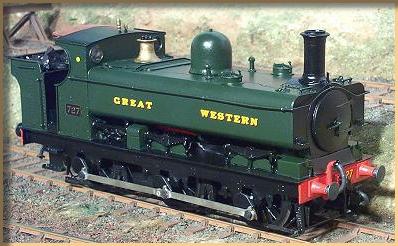
GWR 1076 Class
| GWR 1076 class | |||||||||||||||||
|---|---|---|---|---|---|---|---|---|---|---|---|---|---|---|---|---|---|
 1593 with a boat train at Hakin Docks station, Milford Haven in 1889 | |||||||||||||||||
| |||||||||||||||||
| |||||||||||||||||
| |||||||||||||||||
The 1076 Class were 266 double framed 0-6-0T locomotives built by the Great Western Railway between 1870 and 1881; the last one, number 1287, was withdrawn in 1946. They are often referred to as the Buffalo Class following the naming of locomotive 1134.
History
These large tank locomotives, with their 4-foot-7+1⁄2-inch (1,410 mm) wheels and 17-by-24-inch (432 mm × 610 mm) dia × stroke cylinders were capable of working trains on the main line. They followed on from George Armstrong's 1016 Class built from 1867, themselves derived from the earlier 302 Class of Joseph Armstrong, and were perpetuated by his successor William Dean until 1881. Modernised saddle tank locomotives of similar size were then produced in the 1813 Class.
The first six were built with side tanks. The following locomotives had saddle tanks covering their boilers and fireboxes, but from 1874 longer saddle tank extending to the front of the smokebox were the norm. All the earlier locomotives were eventually fitted with these larger tanks. Most were reconstructed with pannier tanks from 1911 onwards.
The first locomotives had just a spectacle plate to give protection for the crew, but then small cabs, open at the back, were fitted. Later on most of the surviving locomotives were given full cabs so that there was protection when running in reverse.
Other changes to various locomotives over their long lives were Belpaire fireboxes, enlarged coal bunkers, and even superheaters. One or two were fitted with spark-arresting chimneys. 21 were fitted for working autotrains.
| Year | Quantity | Lot No. | Works Nos. | Locomotive numbers | Notes |
|---|---|---|---|---|---|
| 1870 | 6 | 22 | 245–250 | 1172–1177 | renumbered 1076–1081 in 1870 |
| 1872–73 | 30 | 30 | 402–431 | 727–756 | |
| 1874 | 20 | 37 | 523–542 | 947–966 | |
| 1874–75 | 20 | 39 | 543–562 | 1134–1153 | |
| 1875 | 20 | 40 | 603–622 | 1166–1185 | |
| 1876–77 | 20 | 43 | 663–682 | 1228–1247 | Ran as broad-gauge locomotives from new (nos. 1228–37) or from 1887–88 (remainder) until 1891–93, see later |
| 1877 | 20 | 44 | 683–702 | 1248–1267 | Nos. 1248–57 ran as broad-gauge locomotives from 1887–88 until 1892–93, see later |
| 1877–78 | 30 | 45 | 703–732 | 1268–1297 | |
| 1878–79 | 20 | 48 | 754–773 | 1561–1580 | Ran as broad-gauge locomotives from new (nos. 1561–5) or from 1884 (remainder) until 1892–93, see later |
| 1879 | 20 | 49 | 774–793 | 1581–1600 | |
| 1879–80 | 20 | 50 | 794–813 | 1601–1620 | |
| 1880 | 20 | 52 | 824–843 | 1621–1640 | |
| 1880–81 | 20 | 55 | 846–865 | 1641–1660 |
Broad gauge conversions

Ten locomotives were built in 1876 with broad gauge wheels outside the standard double frames. Five more broad gauge locomotives were built in 1878, while from 1884 another 35 were converted from standard gauge to broad. All were eventually converted back to standard gauge.
1256 was one of a pair of locomotives that worked the last broad gauge train from Penzance back to Swindon for conversion on 20 May 1892.
Locomotives built new as broad gauge are denoted in this list by an asterisk*.
- 1228 * (1876–1892)
- 1229 * (1876–1892)
- 1230 * (1876–1892)
- 1231 * (1876–1892)
- 1232 * (1876–1892)
- 1233 * (1876–1892)
- 1234 * (1876–1892)
- 1235 * (1876–1892)
- 1236 * (1876–1892)
- 1237 * (1876–1893)
- 1238 (1888–1892)
- 1239 (1887–1892)
- 1250 (1888–1893)
- 1251 (1887–1891)
- 1252 (1887–1892)
- 1253 (1888–1892)
- 1254 (1888–1892)
- 1255 (1888–1893)
- 1256 (1887–1892)
- 1257 (1887–1892)
- 1258 (1887–1892)
- 1259 (1887–1892)
- 1260 (1888–1892)
- 1261 (1888–1892)
- 1262 (1888–1893)
- 1263 (1887–1892)
- 1264 (1887–1893)
- 1265 (1888–1893)
- 1266 (1887–1892)
- 1267 (1887–1893)
- 1561 * (1878–1892)
- 1562 * (1878–1893)
- 1563 * (1878–1892)
- 1564 * (1878–1893)
- 1565 * (1878–1892)
- 1566 (1884–1892)
- 1567 (1884–1892)
- 1568 (1884–1892)
- 1569 (1884–1892)
- 1570 (1884–1892)
- 1571 (1884–1892)
- 1572 (1884–1892)
- 1573 (1884–1892)
- 1574 (1884–1892)
- 1575 (1884–1892)
- 1576 (1884–1892)
- 1577 (1884–1892)
- 1578 (1884–1893)
- 1579 (1884–1892)
- 1580 (1884–1893)
Named locomotive
- 1134 Buffalo
- The reason this locomotive was given a name is unclear. It was certainly named within a few years of construction but there was already a Buffalo 0-6-0ST which gave its name to the South Devon Railway Buffalo class. The nameplate was removed from 1134 in 1914 when it was fitted with its pannier tanks. The name itself is that of a strong animal, the Buffalo.
Locomotives sold
Two locomotives were sold to the Neath and Brecon Railway:
- 1563 became N&BR 14 in 1911 and returned to the Great Western Railway in 1922
- 1591 became N&BR 15 in 1912 and returned to the Great Western Railway in 1922 was withdrawn before being given it number back
Five locomotives were sold to the Rhondda and Swansea Bay Railway:
- 1660 became R&SBR 2 in 1919 and returned to the Great Western Railway in 1922
- 1652 became R&SBR 31 in 1912 and returned to the Great Western Railway in 1922
- 728 became R&SBR 32 in 1915 and returned to the Great Western Railway in 1922
- 957 became R&SBR 33 in 1914 and returned to the Great Western Railway in 1922
- 1167 became R&SBR 34 in 1919 and returned to the Great Western Railway in 1922
List of locomotives
727 to 756
Originally fitted with short saddle tanks.
- 727 (1872–1929, pannier tanks fitted 1922)
- 728 (1872–1929, pannier tanks fitted 1923)
- 729 (1872–1910)
- 730 (1872–1930, pannier tanks fitted 1922)
- 731 (1872–1929, pannier tanks fitted 1921)
- 732 (1872–1932, pannier tanks fitted 1925)
- 733 (1872–1934, pannier tanks fitted 1922)
- 734 (1872–1931, pannier tanks fitted 1926)
- 735 (1873–1930, pannier tanks fitted 1921)
- 736 (1873–1932, pannier tanks fitted 1912)
- 737 (1873–1932, pannier tanks fitted 1927)
- 738 (1873–1936, pannier tanks fitted 1917)
- 739 (1873–1930, pannier tanks fitted 1925)
- 740 (1873–1929, pannier tanks fitted 1914)
- 741 (1873–1931, pannier tanks fitted 1924)
- 742 (1873–1919)
- 743 (1873–1934, pannier tanks fitted 1916)
- 744 (1873–1932, pannier tanks fitted 1916)
- 745 (1873–1933, pannier tanks fitted 1925)
- 746 (1873–1927, pannier tanks fitted 1916)
- 747 (1873–1911)
- 748 (1873–1932, pannier tanks fitted 1919)
- 749 (1873–1928, pannier tanks fitted 1912)
- 750 (1873–1930, pannier tanks fitted 1920)
- 751 (1873–1931, pannier tanks fitted 1915)
- 752 (1873–1934, pannier tanks fitted 1914)
- 753 (1873–1935, pannier tanks fitted 1924)
- 754 (1873–1911)
- 755 (1873–1929, pannier tanks fitted 1918)
- 756 (1873–1928, pannier tanks fitted 1912)
947 to 966
Originally fitted with short saddle tanks.
- 947 (1874–1932, pannier tanks fitted 1915)
- 948 (1874–1915)
- 949 (1874–1934, pannier tanks fitted 1922)
- 950 (1874–1932, pannier tanks fitted 1912)
- 951 (1874–1930, pannier tanks fitted 1920)
- 952 (1874–1931, pannier tanks fitted 1920)
- 953 (1874–1929, pannier tanks fitted 1923)
- 954 (1874–1931, pannier tanks fitted 1919)
- 955 (1874–1931, pannier tanks fitted 1916)
- 956 (1874–1930, pannier tanks fitted 1916)
- 957 (1874–1932, pannier tanks fitted 1922)
- 958 (1874–1933, pannier tanks fitted 1915)
- 959 (1874–1930, pannier tanks fitted 1926)
- 960 (1874–1932, pannier tanks fitted 1924)
- 961 (1874–1930, pannier tanks fitted 1916)
- 962 (1874–1931, pannier tanks fitted 1927)
- 963 (1874–1936, pannier tanks fitted 1922)
- 964 (1874–1929, pannier tanks fitted 1916)
- 965 (1874–1930, pannier tanks fitted 1914)
- 966 (1874–1929, pannier tanks fitted 1919)
1076 to 1081
Originally fitted with side tanks.
- 1076 (1870–1930, pannier tanks fitted 1926)
- 1077 (1870–1931, pannier tanks fitted 1918)
- 1078 (1870–1928, pannier tanks fitted 1923)
- 1079 (1870–1930, pannier tanks fitted 1913)
- 1080 (1870–1934, pannier tanks fitted 1927)
- 1081 (1870–1931, pannier tanks fitted 1919)
1134 to 1153
Most were originally fitted with short saddle tanks.
- 1134 (1874–1934, pannier tanks fitted 1914)
- 1135 (1874–1931, pannier tanks fitted 1914)
- 1136 (1874–1935, pannier tanks fitted 1925)
- 1137 (1874–1933, pannier tanks fitted 1914)
- 1138 (1874–1930, pannier tanks fitted 1919)
- 1139 (1874–1930, pannier tanks fitted 1913)
- 1140 (1874–1928, pannier tanks fitted 1911)
- 1141 (1874–1932, pannier tanks fitted 1922)
- 1142 (1874–1935, pannier tanks fitted 1911)
- 1143 (1874–1932, pannier tanks fitted 1914)
- 1144 (1875–1931, pannier tanks fitted 1914)
- 1145 (1875–1934, pannier tanks fitted 1920)
- 1146 (1875–1929, pannier tanks fitted 1920)
- 1147 (1875–1931, pannier tanks fitted 1923)
- 1148 (1875–1934, pannier tanks fitted 1922)
- 1149 (1875–1928, pannier tanks fitted 1920)
- 1150 (1875–1928)
- 1151 (1875–1932, pannier tanks fitted 1919)
- 1152 (1875–1935, pannier tanks fitted 1920)
- 1153 (1875–1932, pannier tanks fitted 1921)
1166 to 1185
- 1166 (1875–1934, pannier tanks fitted 1922)
- 1167 (1875–1936, pannier tanks fitted 1913)
- 1168 (1875–1928, pannier tanks fitted 1923)
- 1169 (1875–1934, pannier tanks fitted 1917)
- 1170 (1875–1927, pannier tanks fitted 1918)
- 1171 (1875–1934, pannier tanks fitted 1915)
- 1172 (1875–1930, pannier tanks fitted 1920)
- 1173 (1875–1928, pannier tanks fitted 1914)
- 1174 (1875–1934, pannier tanks fitted 1917)
- 1175 (1875–1933, pannier tanks fitted 1911)
- 1176 (1875–1931, pannier tanks fitted 1924)
- 1177 (1875–1929, pannier tanks fitted 1924)
- 1178 (1875–1930, pannier tanks fitted 1920)
- 1179 (1875–1935, pannier tanks fitted 1920)
- 1180 (1875–1934, pannier tanks fitted 1911)
- 1181 (1875–1935, pannier tanks fitted 1916)
- 1182 (1875–1929, pannier tanks fitted 1920)
- 1183 (1875–1930, pannier tanks fitted 1922)
- 1184 (1875–1903)
- 1185 (1875–1931, pannier tanks fitted 1919)
1228 to 1297
- 1228 (1876–1931, pannier tanks fitted 1916)
- 1229 (1876–1931, pannier tanks fitted 1917)
- 1230 (1876–1932, pannier tanks fitted 1914)
- 1231 (1876–1930, pannier tanks fitted 1928)
- 1232 (1876–1930, pannier tanks fitted 1923)
- 1233 (1876–1931, pannier tanks fitted 1922)
- 1234 (1876–1935, pannier tanks fitted 1928)
- 1235 (1876–1937, pannier tanks fitted 1924)
- 1236 (1876–1931, pannier tanks fitted 1923)
- 1237 (1876–1934, pannier tanks fitted 1915)
- 1238 (1876–1932, pannier tanks fitted 1926)
- 1239 (1876–1935, pannier tanks fitted 1927)
- 1240 (1877–1935, pannier tanks fitted 1917)
- 1241 (1877–1928, pannier tanks fitted 1921)
- 1242 (1877–1931, pannier tanks fitted 1913)
- 1243 (1877–1932, pannier tanks fitted 1913)
- 1244 (1877–1930, pannier tanks fitted 1920)
- 1245 (1877–1935, pannier tanks fitted 1927)
- 1246 (1877–1934, pannier tanks fitted 1924)
- 1247 (1877–1939, pannier tanks fitted 1914)
- 1248 (1877–1931, pannier tanks fitted 1916)
- 1249 (1877–1929, pannier tanks fitted 1920)
- 1250 (1877–1935, pannier tanks fitted 1925)
- 1251 (1877–1929, pannier tanks fitted 1925)
- 1252 (1877–1932, pannier tanks fitted 1911)
- 1253 (1877–1932, pannier tanks fitted 1913)
- 1254 (1877–1937, pannier tanks fitted 1916)
- 1255 (1877–1931, pannier tanks fitted 1928)
- 1256 (1877–1936, pannier tanks fitted 1921)
- 1257 (1877–1930, pannier tanks fitted 1919)
- 1258 (1877–1929, pannier tanks fitted 1925)
- 1259 (1877–1932, pannier tanks fitted 1920)
- 1260 (1877–1934, pannier tanks fitted 1921)
- 1261 (1877–1928, pannier tanks fitted 1921)
- 1262 (1877–1930, pannier tanks fitted 1915)
- 1263 (1877–1934, pannier tanks fitted 1920)
- 1264 (1877–1928, pannier tanks fitted 1923)
- 1265 (1877–1937, pannier tanks fitted 1922)
- 1266 (1877–1930, pannier tanks fitted 1916)
- 1267 (1877–1930, pannier tanks fitted 1925)
- 1268 (1877–1934, pannier tanks fitted 1914)
- 1269 (1877–1938, pannier tanks fitted 1921)
- 1270 (1877–1931, pannier tanks fitted 1919)
- 1271 (1877–1937, pannier tanks fitted 1921)
- 1272 (1877–1934, pannier tanks fitted 1920)
- 1273 (1877–1933, pannier tanks fitted 1923)
- 1274 (1877–1930, pannier tanks fitted 1916)
- 1275 (1877–1928, pannier tanks fitted 1916)
- 1276 (1877–1934, pannier tanks fitted 1925)
- 1277 (1877–1911)
- 1278 (1877–1936, pannier tanks fitted 1916)
- 1279 (1877–1935, pannier tanks fitted 1913)
- 1280 (1877–1929, pannier tanks fitted 1922)
- 1281 (1877–1935, pannier tanks fitted 1913)
- 1282 (1877–1936, pannier tanks fitted 1916)
- 1283 (1877–1929, pannier tanks fitted 1920)
- 1284 (1878–1936, pannier tanks fitted 1923)
- 1285 (1878–1934, pannier tanks fitted 1919)
- 1286 (1878–1930, pannier tanks fitted 1919)
- 1287 (1878–1946, pannier tanks fitted 1925)
- 1288 (1878–1930, pannier tanks fitted 1918)
- 1289 (1878–1934, pannier tanks fitted 1925)
- 1290 (1878–1932, pannier tanks fitted 1913)
- 1291 (1878–1929, pannier tanks fitted 1916)
- 1292 (1878–1934, pannier tanks fitted 1915)
- 1293 (1878–1928, pannier tanks fitted 1916)
- 1294 (1878–1931, pannier tanks fitted 1921)
- 1295 (1878–1930, pannier tanks fitted 1923)
- 1296 (1878–1936, pannier tanks fitted 1920)
- 1297 (1878–1932, pannier tanks fitted 1914)
1561 to 1660
- 1561 (1878–1934, pannier tanks fitted 1918)
- 1562 (1878–1938, pannier tanks fitted 1926)
- 1563 (1878–1931, pannier tanks fitted 1923)
- 1564 (1878–1931, pannier tanks fitted 1925)
- 1565 (1878–1938, pannier tanks fitted 1921)
- 1566 (1878–1935, pannier tanks fitted 1913)
- 1567 (1878–1936, pannier tanks fitted 1914)
- 1568 (1878–1938, pannier tanks fitted 1918)
- 1569 (1878–1932, pannier tanks fitted 1918)
- 1570 (1879–1935, pannier tanks fitted 1912)
- 1571 (1879–1931, pannier tanks fitted 1918)
- 1572 (1879–1933, pannier tanks fitted 1914)
- 1573 (1879–1935, pannier tanks fitted 1913)
- 1574 (1879–1937, pannier tanks fitted 1927)
- 1575 (1879–1930, pannier tanks fitted 1911)
- 1576 (1879–1928, pannier tanks fitted 1911)
- 1577 (1879–1934, pannier tanks fitted 1921)
- 1578 (1879–1933, pannier tanks fitted 1927)
- 1579 (1879–1930, pannier tanks fitted 1921)
- 1580 (1879–1935, pannier tanks fitted 1915)
- 1581 (1879–1929)
- 1582 (1879–1931, pannier tanks fitted 1922)
- 1583 (1879–1928, pannier tanks fitted 1919)
- 1584 (1879–1933, pannier tanks fitted 1912)
- 1585 (1879–1946, pannier tanks fitted 1919)
- 1586 (1879–1931, pannier tanks fitted 1918)
- 1587 (1879–1934, pannier tanks fitted 1914)
- 1588 (1879–1929, pannier tanks fitted 1917)
- 1589 (1879–1928, pannier tanks fitted 1922)
- 1590 (1879–1931, pannier tanks fitted 1918)
- 1591 (1879–1922)
- 1592 (1879–1928, pannier tanks fitted 1911)
- 1593 (1879–1934, pannier tanks fitted 1920)
- 1594 (1879–1930)
- 1595 (1879–1927, pannier tanks fitted 1911)
- 1596 (1879–1928, pannier tanks fitted 1917)
- 1597 (1879–1934, pannier tanks fitted 1916)
- 1598 (1879–1935, pannier tanks fitted 1916)
- 1599 (1879–1936, pannier tanks fitted 1923)
- 1600 (1879–1937, pannier tanks fitted 1924)
- 1601 (1879–1931, pannier tanks fitted 1915)
- 1602 (1879–1928, pannier tanks fitted 1914)
- 1603 (1879–1931, pannier tanks fitted 1926)
- 1604 (1879–1929, pannier tanks fitted 1916)
- 1605 (1879–1931, pannier tanks fitted 1914)
- 1606 (1879–1931, pannier tanks fitted 1911)
- 1607 (1880–1930, pannier tanks fitted 1919)
- 1608 (1880–1935, pannier tanks fitted 1917)
- 1609 (1880–1931, pannier tanks fitted 1916)
- 1610 (1880–1935, pannier tanks fitted 1927)
- 1611 (1880–1935, pannier tanks fitted 1915)
- 1612 (1880–1928)
- 1613 (1880–1929, pannier tanks fitted 1915)
- 1614 (1880–1928, pannier tanks fitted 1917)
- 1615 (1880–1939, pannier tanks fitted 1917)
- 1616 (1880–1929, pannier tanks fitted 1920)
- 1617 (1880–1934, pannier tanks fitted 1921)
- 1618 (1880–1929)
- 1619 (1880–1929, pannier tanks fitted 1915)
- 1620 (1880–1937, pannier tanks fitted 1917)
- 1621 (1880–1932, pannier tanks fitted 1911)
- 1622 (1880–1929, pannier tanks fitted 1915)
- 1623 (1880–1936, pannier tanks fitted 1913)
- 1624 (1880–1946, pannier tanks fitted 1925)
- 1625 (1880–1928, pannier tanks fitted 1917)
- 1626 (1880–1928, pannier tanks fitted 1912)
- 1627 (1880–1930, pannier tanks fitted 1913)
- 1628 (1880–1932, pannier tanks fitted 1914)
- 1629 (1880–1937, pannier tanks fitted 1924)
- 1630 (1880–1934, pannier tanks fitted 1921)
- 1631 (1880–1929, pannier tanks fitted 1913)
- 1632 (1880–1939, pannier tanks fitted 1913)
- 1633 (1880–1929, pannier tanks fitted 1920)
- 1634 (1880–1929, pannier tanks fitted 1915)
- 1635 (1880–1932, pannier tanks fitted 1911)
- 1636 (1880–1929, pannier tanks fitted 1914)
- 1637 (1880–1935, pannier tanks fitted 1913)
- 1638 (1880–1938, pannier tanks fitted 1917)
- 1639 (1880–1931, pannier tanks fitted 1914)
- 1640 (1880–1931, pannier tanks fitted 1917)
- 1641 (1880–1938, pannier tanks fitted 1913)
- 1642 (1880–1935, pannier tanks fitted 1921)
- 1643 (1880–1931, pannier tanks fitted 1914)
- 1644 (1880–1935, pannier tanks fitted 1923)
- 1645 (1880–1934, pannier tanks fitted 1927)
- 1646 (1880–1934, pannier tanks fitted 1918)
- 1647 (1881–1936, pannier tanks fitted 1914)
- 1648 (1881–1936, pannier tanks fitted 1913)
- 1649 (1881–1935, pannier tanks fitted 1920)
- 1650 (1881–1936, pannier tanks fitted 1926)
- 1651 (1881–1930, pannier tanks fitted 1911)
- 1652 (1881–1932, pannier tanks fitted 1923)
- 1653 (1881–1930, pannier tanks fitted 1920)
- 1654 (1881–1932, pannier tanks fitted 1925)
- 1655 (1881–1931, pannier tanks fitted 1913)
- 1656 (1881–1930, pannier tanks fitted 1914)
- 1657 (1881–1931, pannier tanks fitted 1927)
- 1658 (1881–1934, pannier tanks fitted 1914)
- 1659 (1881–1930, pannier tanks fitted 1916)
- 1660 (1881–1938, pannier tanks fitted 1914)
References
- ↑ Allcock et al. (1968), pp. 25–26.
- ↑ Allcock et al. (1968), p. 9.
- 1 2 3 le Fleming 1958, p. E20.
- Allcock, N. J.; Davies, F. K.; le Fleming, H. M.; Maskelyne, J. N.; Reed, P. J. T.; Tabor, F. J. (1968) [1951]. White, D. E. (ed.). The Locomotives of the Great Western Railway, part one: Preliminary Survey. Kenilworth: RCTS.
- le Fleming, H. M. (April 1958). White, D. E. (ed.). The Locomotives of the Great Western Railway, part five: Six-coupled Tank Engines. RCTS. ISBN 0-901115-35-5. OCLC 500544510.
{{cite book}}: CS1 maint: ignored ISBN errors (link) - Aves, W.A.T. (1998). "The Pre-1923 GWR Pannier and Saddle Tank Locomotives". Locomotives Illustrated (118). RAS Publishing. ISSN 0307-1804.
- Casserley, H.C.; Johnston, S.C. (1966). Locomotives at the Grouping: Great Western Railway. Shepperton: Ian Allan Publishing. ISBN 0-7110-0555-9.
- Reed, P. J. T. (February 1953). White, D. E. (ed.). The Locomotives of the Great Western Railway, Part 2: Broad Gauge. Kenilworth: RCTS. pp. B44–B45. ISBN 0-901115-32-0. OCLC 650490992.
{{cite book}}: CS1 maint: ignored ISBN errors (link) - Russell, J.H. (1975). A Pictorial Record of Great Western Engines, Volume 1. Oxford: Oxford Publishing Company. ISBN 0-86093-398-9.
- Waters, Laurence (1999). The Great Western Broad Gauge. Hersham: Ian Allan Publishing. ISBN 0-7110-2634-3.